
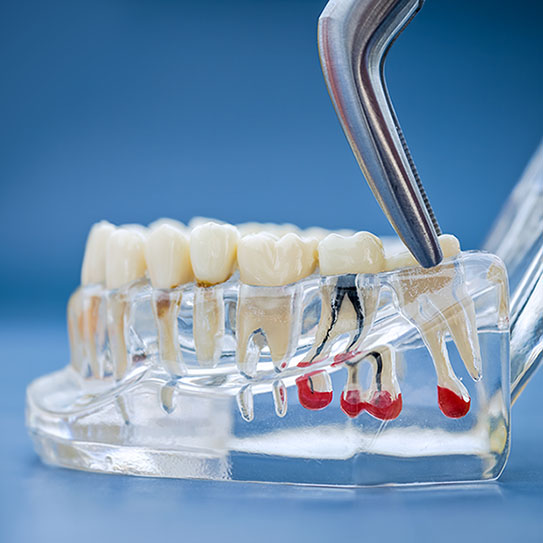
WHEN MOST PEOPLE hear they need endodontic treatment, they think of a root canal. In most cases, a root canal is all it takes to save an infected tooth. Occasionally, though, infection or inflammation lingers near the tip of the root even after treatment. When that happens, an apicoectomy may be the best way to keep your natural tooth healthy and functional for years to come.
What Is an Apicoectomy?
An apicoectomy, sometimes called root-end surgery, is a minor surgical procedure performed by an endodontist. Rather than accessing the tooth through the crown, as in a root canal, the endodontist makes a small opening in the gum tissue near the end of the root. The inflamed or infected tissue is removed, along with the very tip of the root. A small filling is then placed to seal the end of the root canal, and the gum is stitched closed. Over the following months, the bone naturally heals around the root.
The procedure is typically done under local anesthesia, and most patients return to normal activities the next day.
Who Is a Good Candidate?
An apicoectomy can help patients in several situations:
- Persistent infection after a root canal. Sometimes a tooth that has already had a root canal continues to cause discomfort, swelling, or shows signs of infection on an X-ray. If retreatment through the crown is unlikely to succeed, an apicoectomy addresses the problem directly at the source.
- Complex root anatomy. Some teeth have tiny branches, curves, or accessory canals that are extremely difficult to clean from inside the tooth. Infected tissue can hide in these areas. Root-end surgery allows the endodontist to reach and seal places that conventional treatment cannot.
- Teeth with crowns or posts. If your tooth has a well-fitting crown, bridge, or post, redoing a root canal would mean removing that restoration. An apicoectomy can often treat the infection while leaving your existing dental work in place, saving you time and cost.
- Calcified canals. As we age, or after trauma, the canals inside a tooth can narrow or become blocked with calcium deposits. When instruments cannot pass through, approaching the root from the end may be the most practical option.
- Suspected root fractures or other hidden problems. In some cases, surgery also lets the endodontist examine the root closely to identify small cracks or defects that do not show up on imaging.
Why Save Your Natural Tooth?
Extraction might seem like a simpler solution, but replacing a missing tooth with an implant or bridge involves additional procedures, longer treatment time, and higher expense. Your natural tooth also helps preserve the surrounding bone and keeps neighboring teeth from shifting. When an apicoectomy is appropriate, it offers a high success rate and a chance to keep your smile intact.
Is an Apicoectomy Right for You?
Not every patient with a troublesome tooth needs surgery, and not every tooth can be saved. The best way to find out is a thorough evaluation, which may include 3D imaging to see the root and surrounding bone in detail. If you are experiencing ongoing pain, swelling, or tenderness in a previously treated tooth, contact our office to schedule a consultation. We will review your options and help you choose the treatment that gives your tooth the best chance for long-term health.